8 Mistakes in Writing That Sabotage Your Book (and How to Fix Them!)
HIT PLAY OR READ THE POST BELOW:
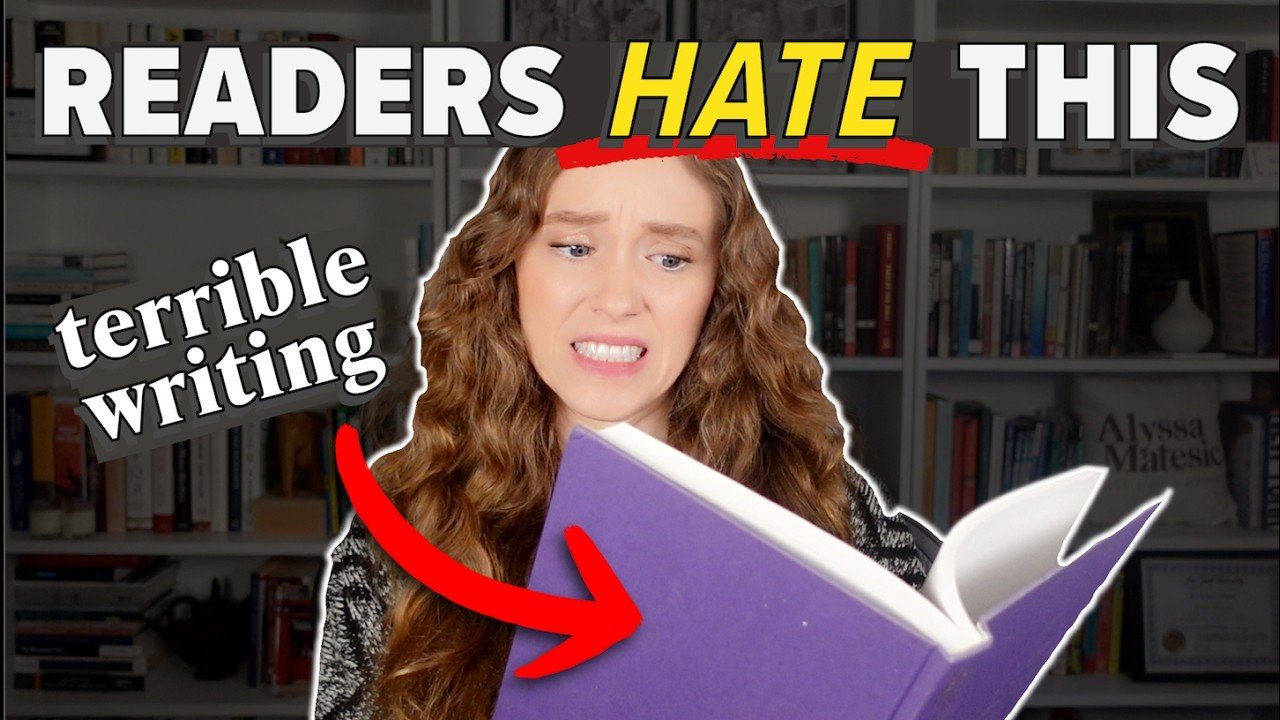
The last thing you want to do is make your readers roll their eyes or get so annoyed that they end up putting your book down. So let’s talk about the biggest mistakes in writing that could cause readers to DNF your book.
1. Witty Characters That Feel Cringy (Biggest Mistake in Writing)
Don't get me wrong, you can certainly have characters who are clever, sarcastic, and quick on their feet, but ensure these moments feel true to the character and the situation. Too often, these moments feel like you as the author trying to show the reader how witty you are. So avoid this common writing mistake at all costs.
Take Elizabeth Bennett from Pride and Prejudice, one of the classic examples of a well-written, witty character. Her wit works so well because it's grounded in her intelligence and her perspective on society. When she teases Mr. Darcy or fires back at Lady Catherine, her dialogue isn't just smart and snarky; it actually reveals a lot about her values and worldview. Her wit is part of her character development, and that's why it still lands 200 years later.
Now, let's compare that to a bad example of wit where the joke feels forced, falls flat, and doesn't actually enhance our understanding of the character. Imagine we saw an exchange between Lizzy and Mr. Darcy that went like this.
Mr. Darcy: “Miss Bennett, now that I've seen you dance, I dare say I've seen cows in the pasture with more elegance.”
Lizzy: “How fascinating, Mr. Darcy, for I've heard cows in the pasture have also found your conversation to be utterly boring.”
That doesn’t sound good, right? Darcy's insult feels so on-the-nose and stilted. And Lizzy's wordplay with “utterly” feels super cheesy and also likely anachronistic.
This exchange doesn't read as clever, but cringy, making it clear that the author is trying to force it where it isn't working. That’s a big mistake in writing.
2. Pet Phrases
Pet phrases are among the most overlooked mistakes in writing that I see in manuscripts I’m editing.
I'm always on the lookout for phrases that the author overuses, because the reader will pick up on them and they'll become distracting. If you say “gold-flecked-eyes” three times on one page, you need to vary the prose.
And the more unique the phrase is, the more it's going to stick out. We'll start to notice the writer behind the scenes recycling that same language. And once that trust is broken with the reader, it's really hard to earn it back.
Each POV character should have their own unique voice, their own vocabulary, tone, and way of seeing and describing the world, so don’t use the same pet phrases across different POVs. A 19-year-old rapper and a 65-year-old astronomy professor probably wouldn't describe the same sunset using the same words.
Pet phrases can be really hard to see for yourself. So, if you have someone reading or editing your manuscript, ask them to be on the lookout for repeat phrases. Then, do a quick search through your manuscript for every instance of that phrase and variations of it and change the wording as much as you can.
3. Spoon-feeding the Ending (Mistakes in Writing Your Conclusion)
This is one of the most damaging mistakes in writing because it runs the risk of ruining your entire book for readers. Instead of trusting the reader to connect the dots, the author spells everything out clearly and leaves absolutely nothing open to interpretation. The result is a bad ending that feels like it hits us over the head with the point.
The most powerful endings leave just enough unsaid, so we're left thinking about the story even after we finish the final page. But if the author tells us exactly what to think and feel, that emotional experience gets shortchanged. Your reader is smart, so don't feel like you need to overexplain things to them, especially at the end.
If you've done your job working in your themes and building up to the ending organically throughout the rest of the story, then you will have already laid all the groundwork for your final scene to land with your intended impact. It should resonate without you having to spoon-feed it to the reader.
4. Perfect Main Characters
This mistake in writing stems from a good instinct. You probably want your reader to like your protagonist to some degree, unless you're writing an intentionally unlikable or unreliable main character. That's totally fair, and it's fine for them to have some positive traits, whether they're beautiful, talented, or incredibly accomplished. But remember that a character you describe as totally flawless will actually come across as inauthentic.
The best characters are compelling precisely because of their flaws, their vulnerabilities, their regrets, their mistakes. That's what makes them human like the rest of us. Without those negative traits to balance out the positive, your character will have nowhere to grow, and their arc will fall flat.
When you make your protagonist too perfect, two things will happen. You'll alienate your reader because they won't relate to them, and you'll make your story boring.
To combat this, I challenge you to identify your main character's biggest flaw. Make sure that the reader learns about that flaw early in the story. I guarantee it's going to make them feel so much more well-developed.
5. Bad Jokes (A Major Dialogue Mistake in Writing)
Humor is exceptionally hard to write, especially because humor is so subjective. On top of that, you have to make sure the joke makes sense for the character and the situation.
I don't believe you should totally avoid humor, though. Even the darkest, most serious novels have moments of lightness and levity to balance it out. But the key is to know what you're writing and not try to force humor where it doesn't belong.
For example, I recently edited a thriller where the main character finally confronted the killer, the big climax of the plot. The whole story had been building to this confrontation. Then, as the killer pulled out a gun and pointed it at the main character, they said, "Well, I guess my psychic was right that I would die young."
And in that moment, I got totally taken out of the story. The joke just didn't fit the tone or the intensity of the scene, especially because we hadn't seen the character make this type of commentary before. It felt like they were just shrugging off their own potential death rather than fighting to stay alive. It was totally awkward and felt misplaced.
To avoid this mistake in writing, make sure humor fits the voice of the character and is appropriate to the situation.
6. Overused Phrases
Certain phrases have become totally overused in fiction — like a character “letting out a breath they didn’t know they were holding,” their feet “padding down a hall,” or a smile that “didn't reach their eyes” — because they’re things we would never say in real life. They stick out like a sore thumb.
If you want to convey your character letting out a breath or sighing, do so with more original language. Maybe something like “the air hissed behind her teeth,” or you can convey that same physical response with another gesture entirely, like their shoulders relaxing.
Try to be aware of these overused phrases and if you spot them in your manuscript, describe that gesture in another way. This is a big writing mistake because it makes your prose sound amateurish, and seasoned readers will pick up on it.
7. Miscommunication Tropes (Plotting Mistakes in Writing)
Miscommunication tropes happen when authors contrive drama between characters just for the sake of it without it actually enhancing the story or their character arcs.
One of the most common examples of this is when a character sees their love interest having dinner with another character and assumes they're cheating on them. They usually storm out, sometimes refuse to speak to the love interest ever again and spend half the book spiraling — only for us to then learn that that other person was just the love interest's sibling.
That drama isn't satisfying because it could have all been avoided with one simple clarification. There isn't any real source of conflict between the characters. It was all made up.
Another example of this could be a character getting upset with another character for not answering their calls or texts only for us to learn that the other character's phone had been broken or stolen. Again, there's no real tension between them, so there's no substance for the reader to latch on to.
Your characters should have conflict, but it should stem from actual issues in their relationship, not just be silly miscommunications that can and should be avoided.
8. Bad Dialogue (The Most Common Mistake in Writing Fiction)
Bad dialogue is one of the biggest mistakes in writing, and most new authors struggle with it. Bad dialogue is the literary equivalent of nails on a chalkboard.
What actually makes dialogue sound unrealistic? There are so many ways to get dialogue wrong, but here are the three biggest ones:
Characters over-explaining things that they already know just for the reader's benefit.
Using stilted or overly formal language with someone they're supposed to be close with.
Characters saying exactly how they feel explicitly.
The best way to stress test your dialogue is simple: Read it out loud. Does it flow naturally, or do you find yourself tripping up? If you're stumbling, that's a sign you need to go back in and revise it to flow more smoothly.
Writing authentic-sounding dialogue has rhythm, inconsistencies, and even incomplete sentences. It's messy in the way that real speech is messy.
And remember that what a character says aloud to another character is only half of what's going on in a scene. We also need to understand what they're holding back and what they're thinking and feeling during the dialogue exchange for it to be a compelling scene.
These eight mistakes in writing are common, but knowing what irks readers most will help you write a story that resonates widely.
Looking for an expert developmental editor to strengthen your story?

View more: